
Fresco mural painting | Step by step
The project
The project of mural fresco painting is the set of the artist's documents, models, drawings, images and texts that allow him to perform the fresco painting and provide him with a rough idea of what it will be like.
Cardboards
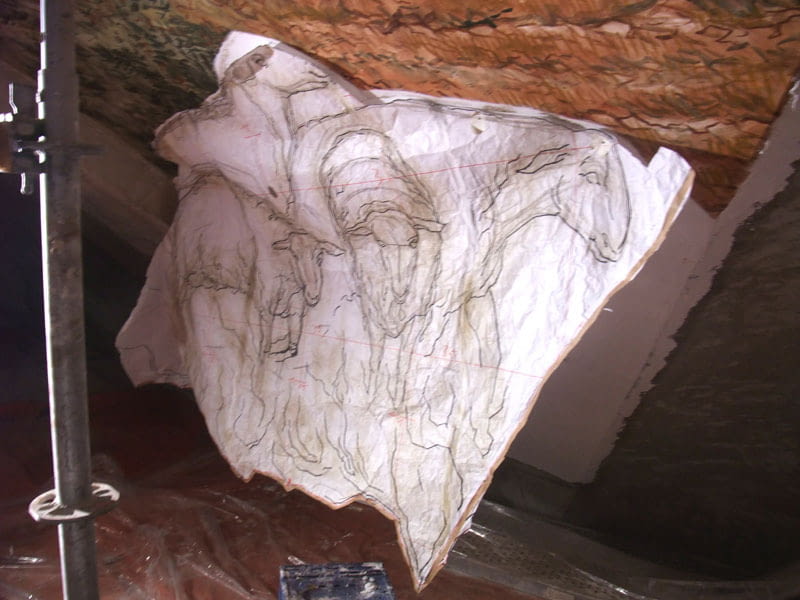
In mural painting, "cardboard" is the full-scale drawing that is created to be reproduced on the fresh mortar: we copy the lines according to the outline of the shapes, that are drawn in the workshop -ideally conditions of comfort, accessibility and visibility which are better than the architectural space where the frescoes will be painted. In some cases, the cardboard is used to represent light and it helps the painter in the application of chiaroscuro.
Projection on the wall
Going from the project to the wall is a characteristic process of fresco painting because of two aspects of the procedure: first, the fresh surface of the mortar , because of its plasticity and moisture, does not allow an effective job in spelling and trace to create the drawing shapes on the walls. Moreover, the work day demands working speed since the time for pictorial action depends on the few hours of lime carbonation.
Work days and wall preparation
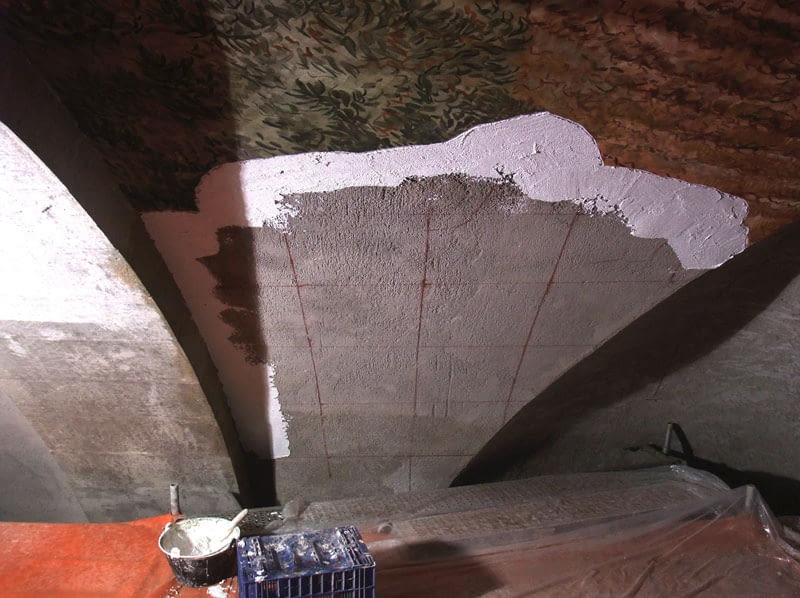
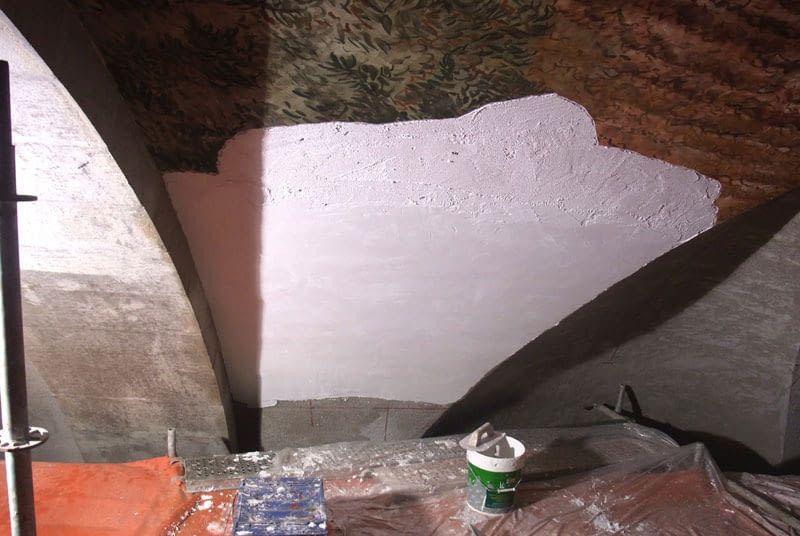
The painter reduces his scope to the surface to be painted in one day, to keep mortar fresh. This requires a physical and conceptual separation into fragments or days, ordered by levels of scaffolding, selected surface and chosen fragmentation strategy: to follow the contour, line or shape that enables the concealing of the painting section. The preparation of the workday consists in two mortar layers: laying and smoothing.
Pictorial action
The painter follows a strict temporal rate, which is determined by working conditions. The preparatory work to be carried out each day make the pictorial action difficult to attain, culminating in the brief time of optimal lime mortar hardening.
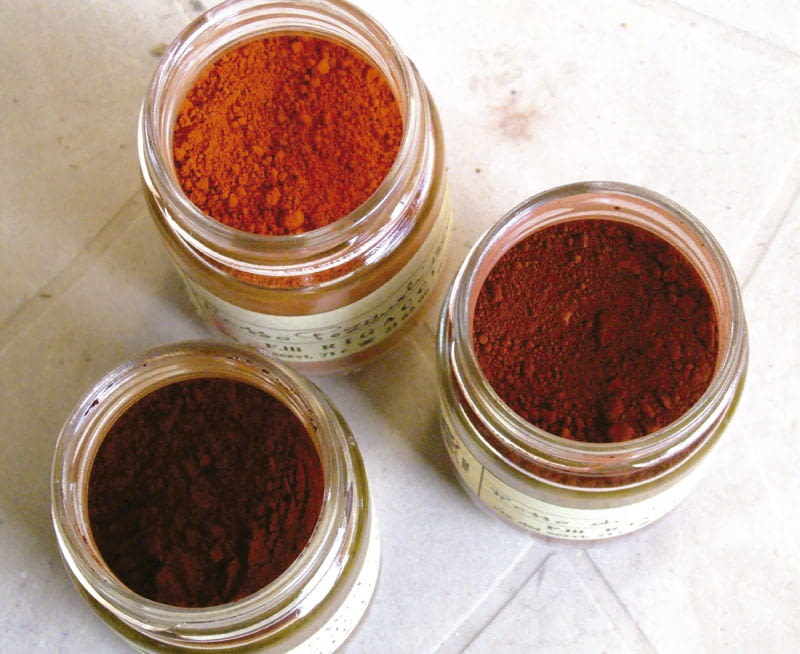
Another unique feature of fresco painting is the use of colored pigment dissolved solely in water or lime water. The perception is very unique, because the pigment is fixed on the wall surface by the action of lime, creating a matte effect and high color saturation.